Fyoli Fyoli
Jamdani NEEL VRIKSH Needlework Handwoven Cotton Sari
Jamdani NEEL VRIKSH Needlework Handwoven Cotton Sari
Couldn't load pickup availability
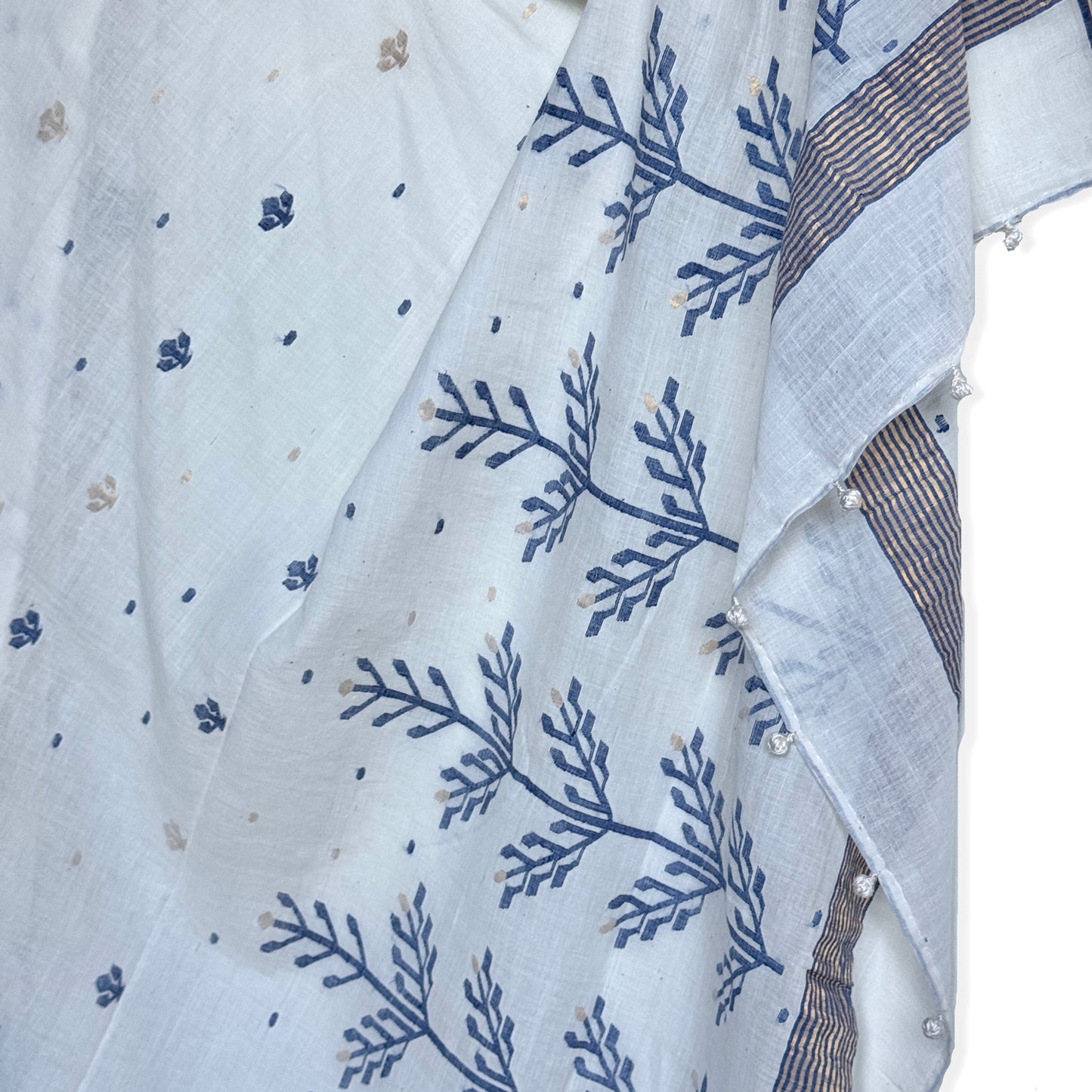
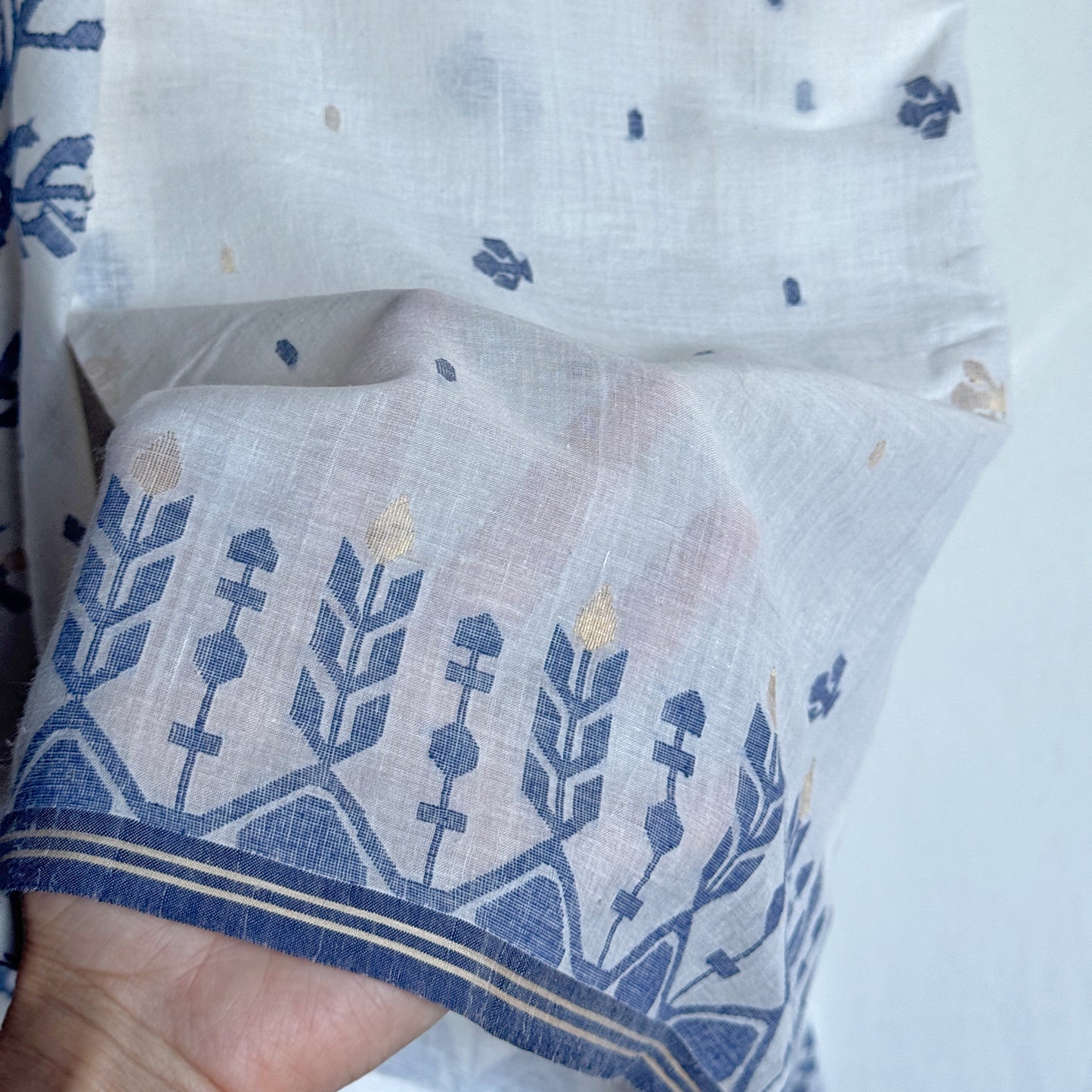
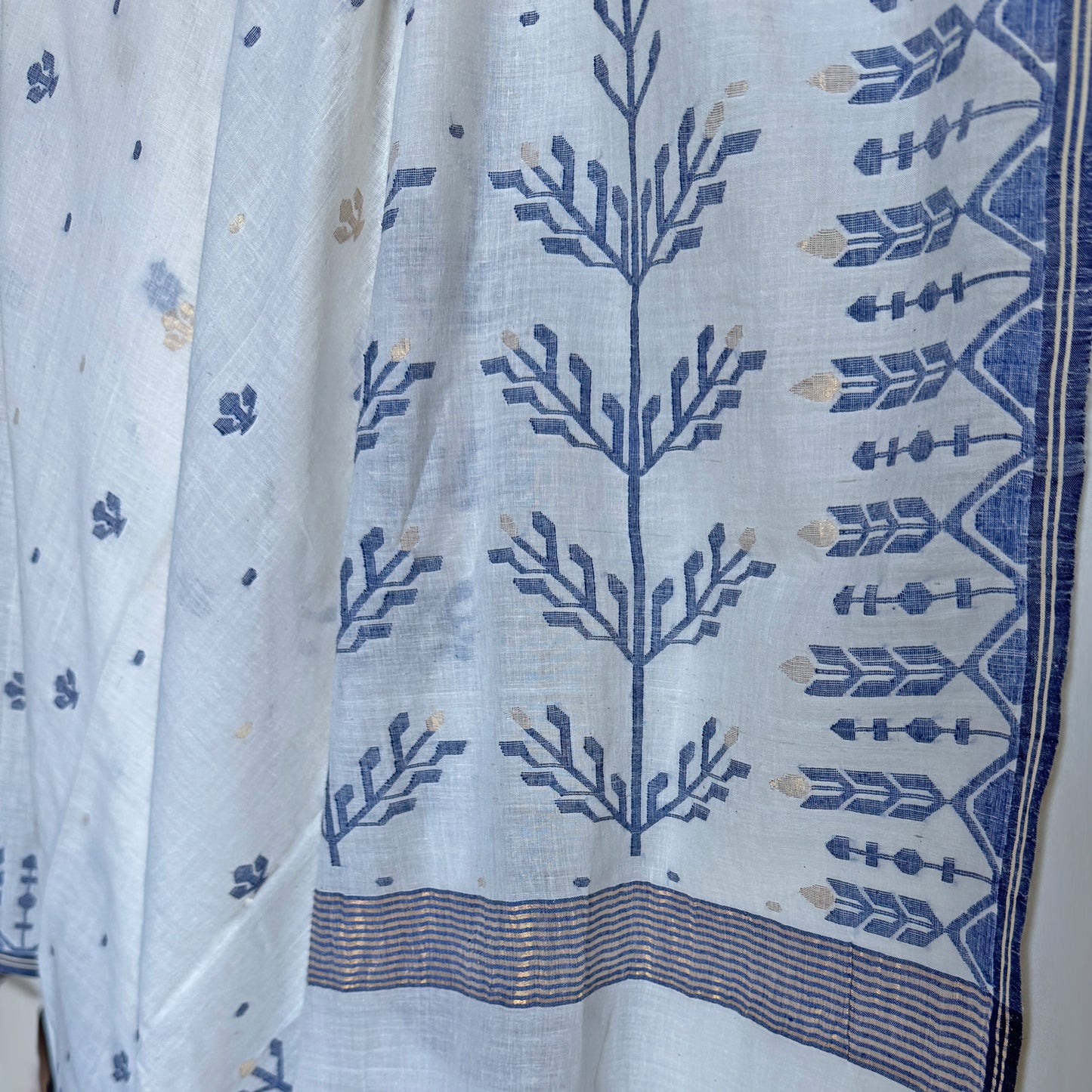
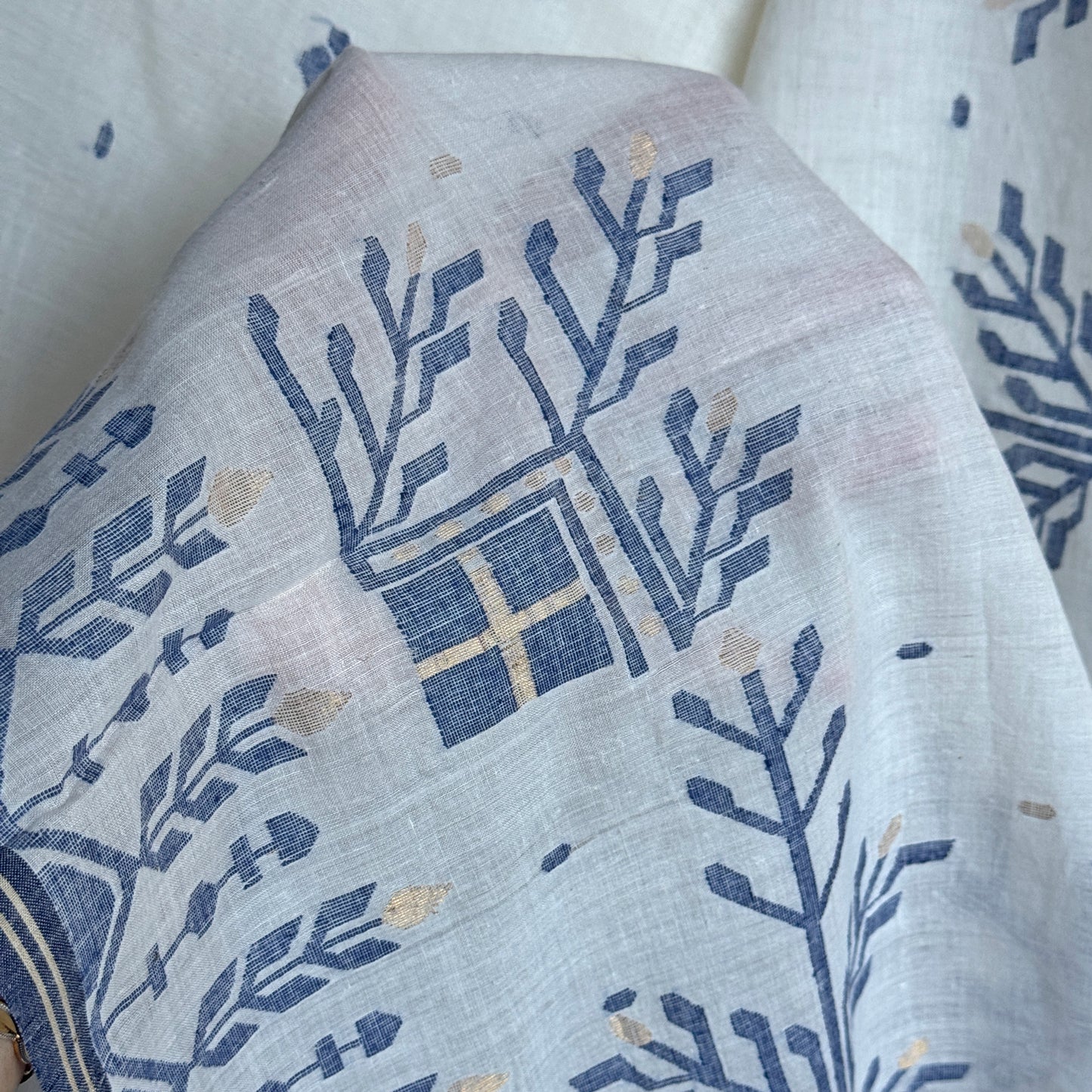
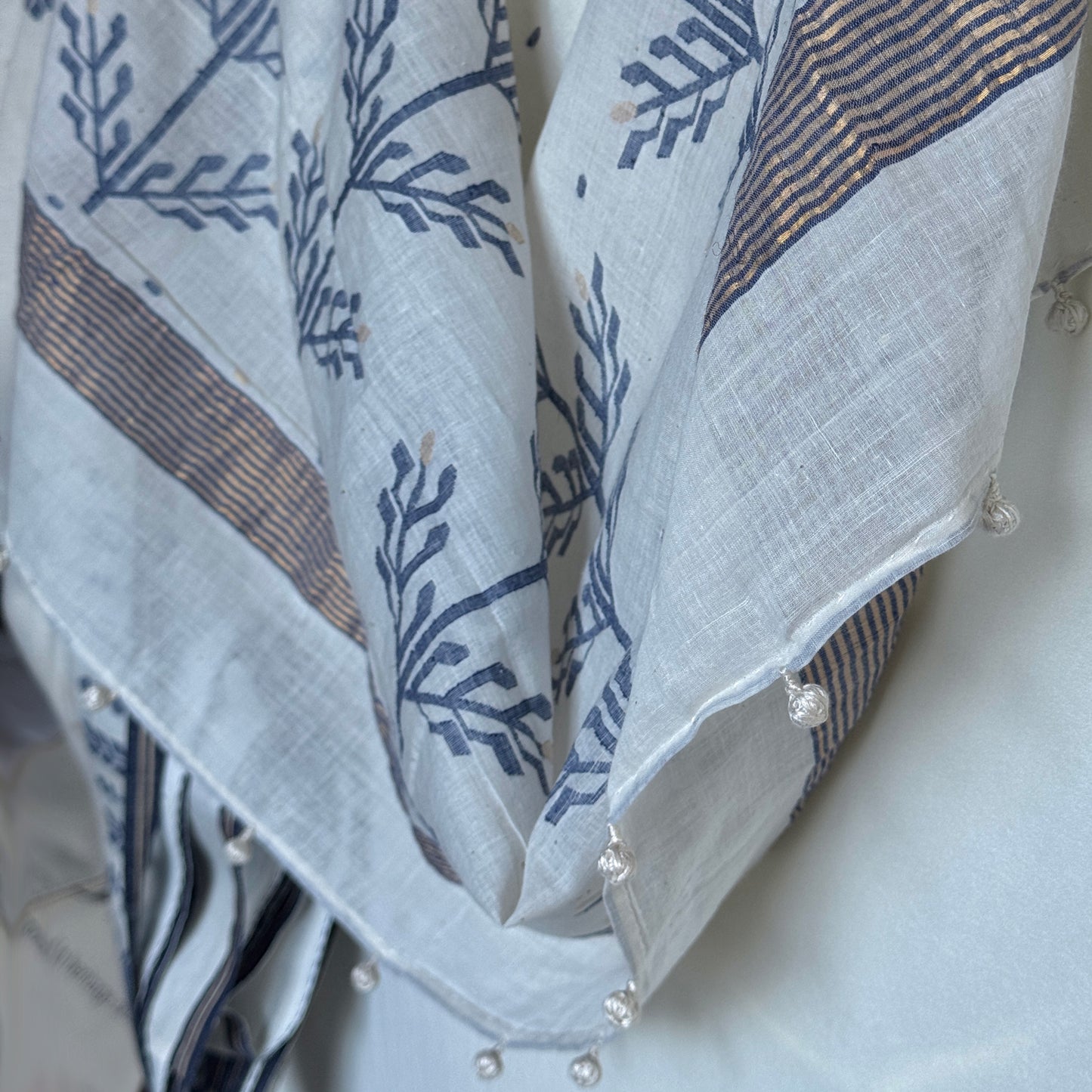
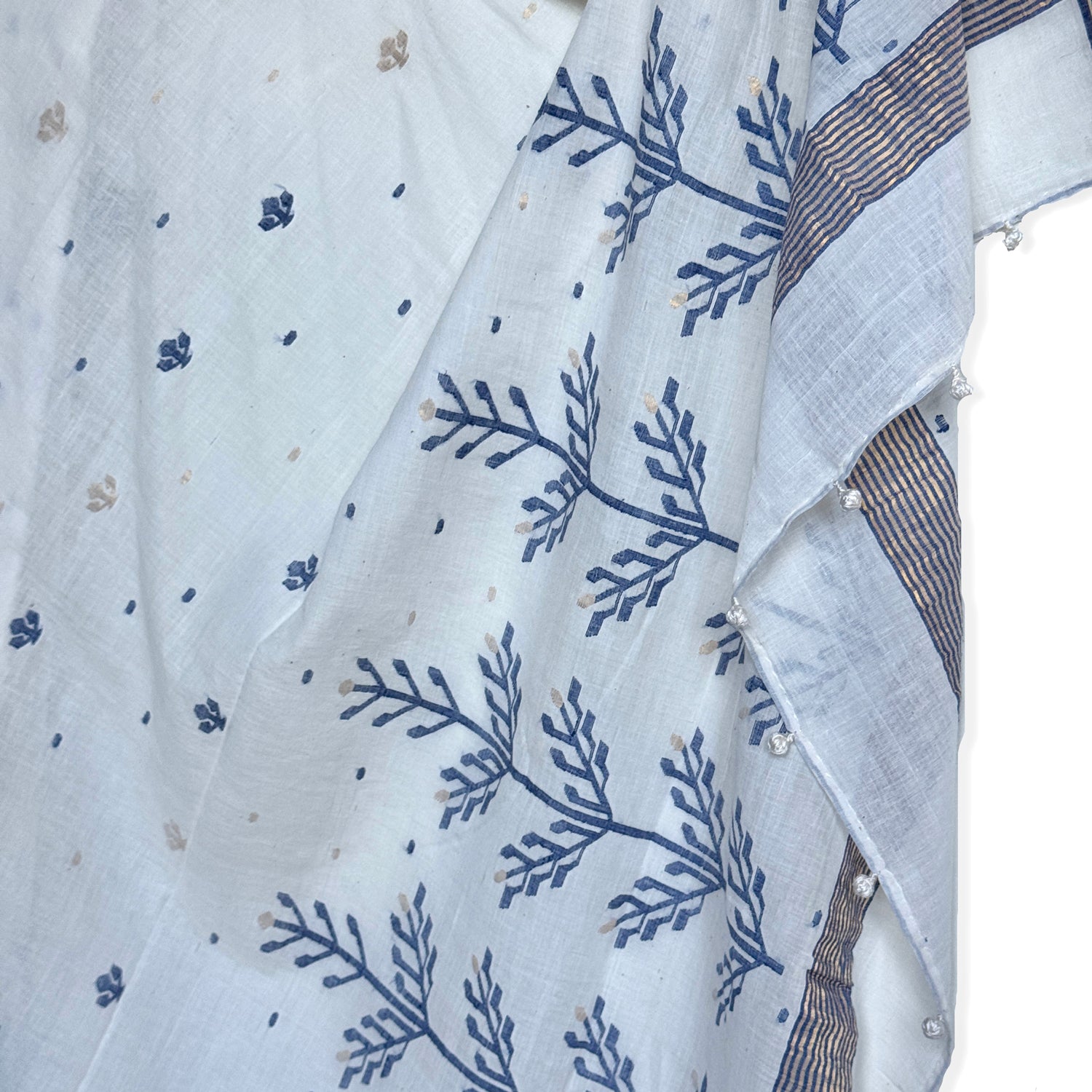
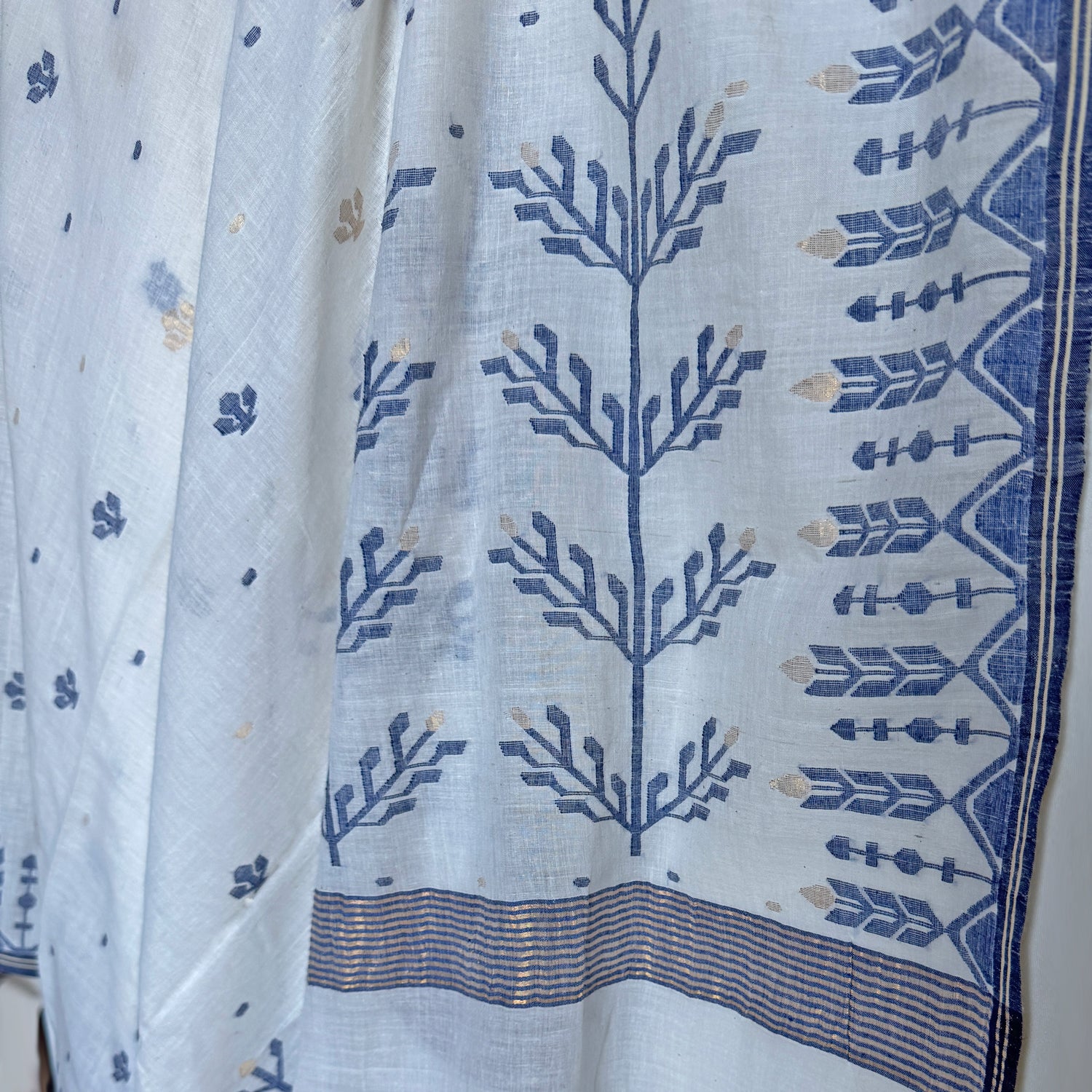
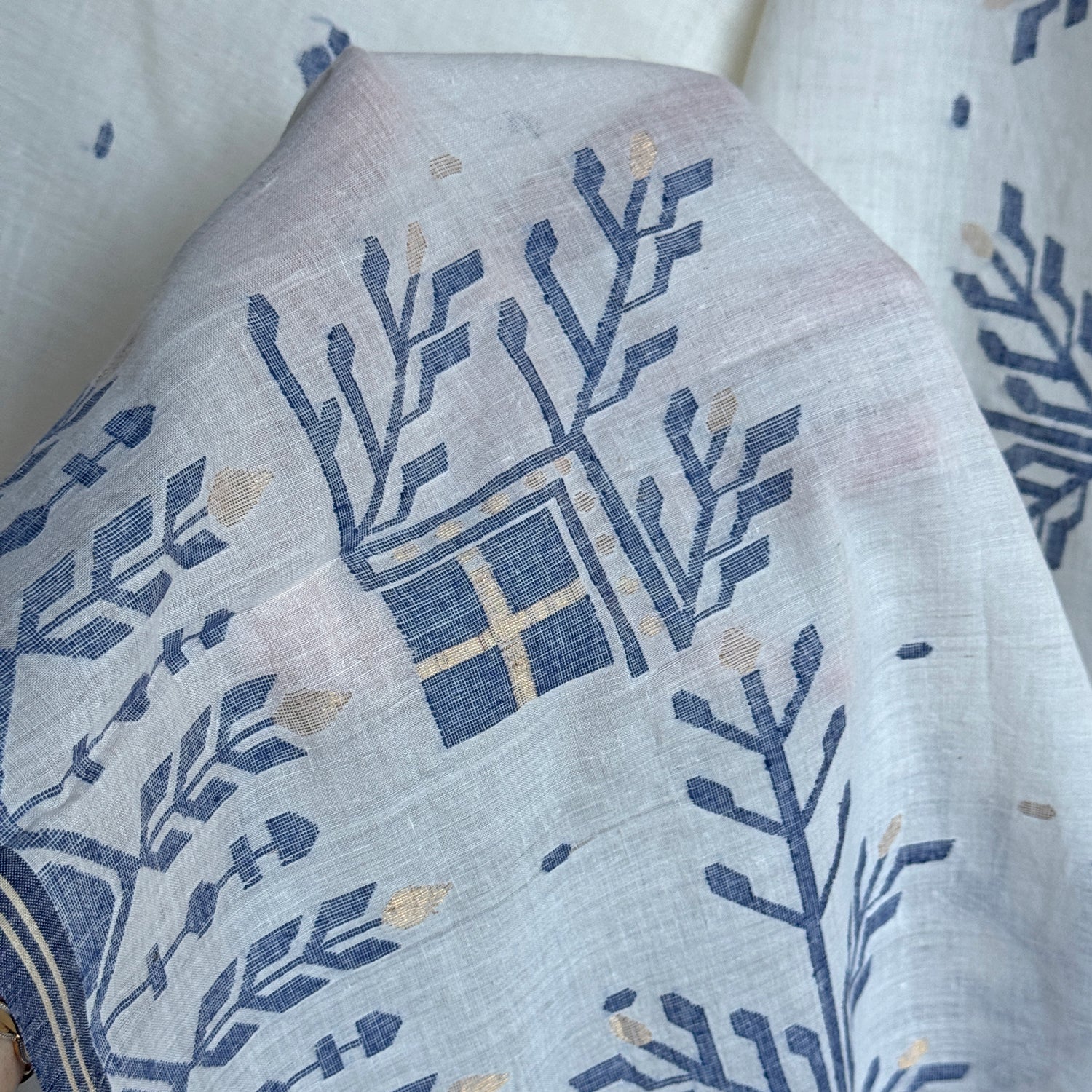
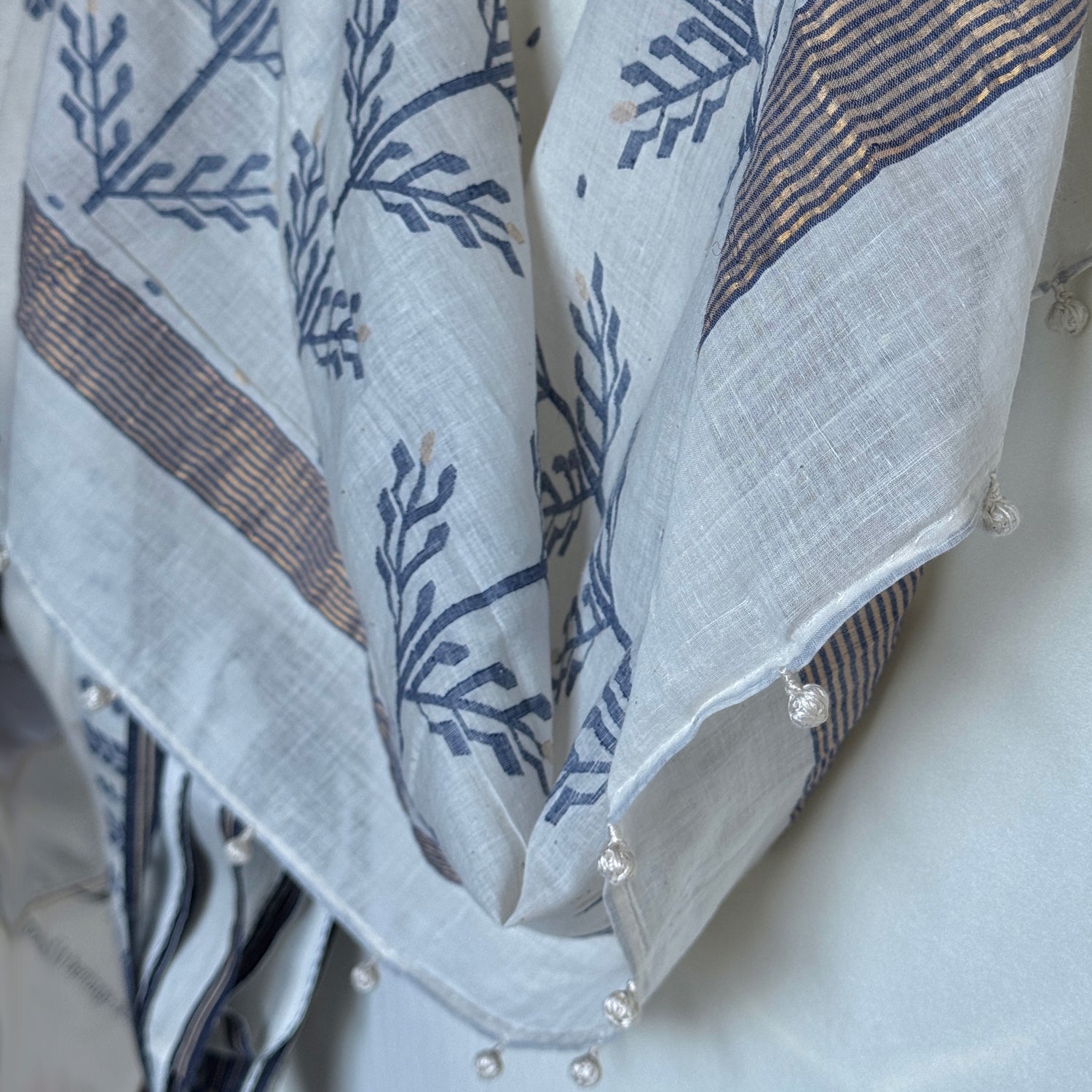
Experience the glory and sensory delight of famed high count needlework Jamdani textile, with this meticulously handwoven sari! Soft, billowy, intricate NEEL VRIKSH (Indigo Tree)needlework Jamdani sari in 200 count hand spun weft. Elaborate pallu design features stunning botanical tree woven motifs. The variations on this include use of undyed Tassar silk as accent in place of zari and dyed golden color Tassar silk in yet another style.
🫶Ethically and sustainably made by our artisan weavers in rural West Bengal.
🫶Long staple cotton yarn has gone minimal processing retaining its healthy natural properties of softness and breathability.
🫶Self evident silk like sheen of mill spun 100 x hand spun 200 count is a sensory delight and a breeze to drape.
Story
Story
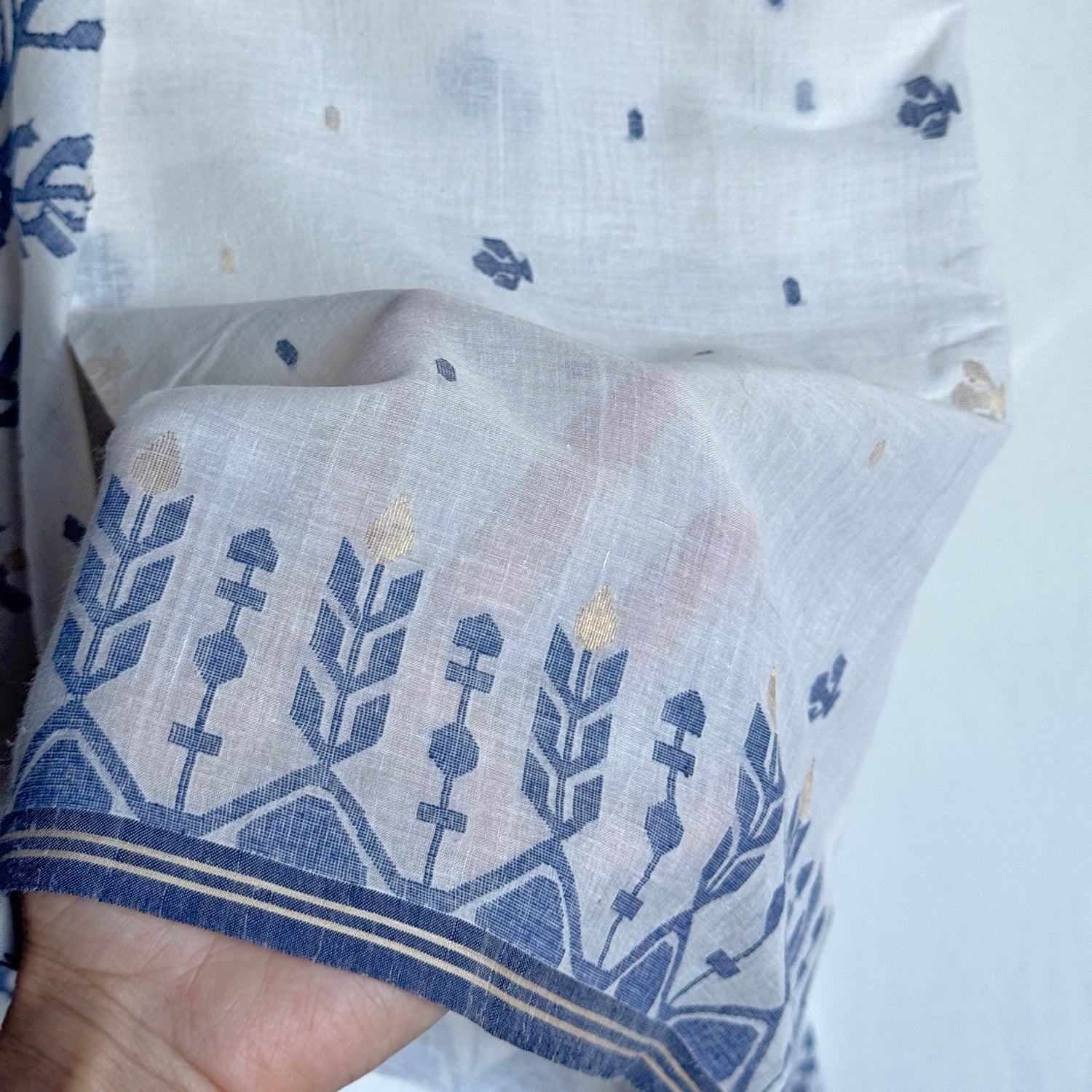
This sari is made using undyed, unbleached kora cotton, azo-free dyed indigo cotton and dull gold zari as accent in the body. Thoughtful special details include a beautiful Kunia motif on either side of the Pallu, undyed Muga silk in the selvedge and handmade round tassels. Truly an epitome of quiet luxury and expertly crafted soulful details.
A contemporary take on the heritage Jamdani weave of West Bengal (a UNESCO intangible heritage) in this remarkable design. Jamdani is a supplementary extra weft hand weaving technique akin to on loom needle embroidery. Thicker yarns are used to create motifs over finer base yarns, creating a beautiful interplay of light and transparency.
The variations on this include use of undyed Tassar silk as accent in place of zari and dyed golden color Tassar silk in yet another style.
While Jamdani weaving in thicker yarns and simpler motifs continues across rural West Bengal, the lineage of high-count, intricate needlework Jamdani stands at a fragile crossroads. This heritage technique—once renowned for its ethereal muslin weave—is increasingly under threat from both environmental and socio-economic pressures.
Working with fine, hand-spun muslin yarns demands a climate of natural humidity to prevent breakage. Rising temperatures and prolonged dry seasons now limit weaving to brief windows in the early morning and late evening, narrowing the number of productive hours in a day. At the same time, the demographic gap widens: master weavers are aging, and younger artisans hesitate to adopt a craft that requires years of practice, intense patience, and offers no guaranteed financial security. Add to this the barriers of language, geographic remoteness, and lack of direct market access, and the challenges become clear.
And yet, the beauty of high-count Jamdani is unparalleled. Its delicate, hand tool called Shola -inserted motifs carry the quiet brilliance of the famed muslins of the past—textiles that once astounded the world with their fineness, luminosity, and artistry. We believe this form of Jamdani still has the power to uplift communities and ignite new possibilities for rural artisans, if given the right support.
This is why we have chosen to invest deeply—both financially and creatively—in this endangered craft. We are training younger men and women under the guidance of master weavers, ensuring that every artisan is paid generously and works in conditions that are healthy, dignified, and joyful. Through thoughtful design interventions, we are reimagining Jamdani in contemporary, exciting ways while honoring its heritage at every step.
The results have been deeply rewarding: renewed enthusiasm among artisans, revived pride in a rare skill, and beautiful feedback from customers who recognize the soul in every piece.
Materials
Materials
100% Suvin Cotton, Tissue Zari, Muga Silk
Dimensions
Dimensions
5.5 yd x 1.3 yd
Care Instructions
Care Instructions
Dry clean or hand-wash in cold water and mild detergents. Please do not wring. Hang or flat reverse dry in shade to preserve the beauty of this fabric. Steam iron on high.
Share